The Cost of an Unfinished Renovation
An unfinished renovation costs more than the price of finishing it. Buyers price the unknown at the top of its range and then extrapolate to what they can’t see, and appraisers report unfinished area separately from finished square footage — so the space doesn’t come back at a discount, it doesn’t come back at all.
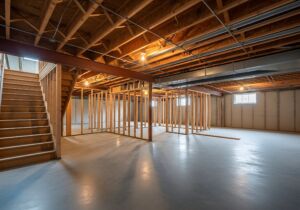
Almost every property has a version of it. The bath that got taken down to studs before the contractor stopped answering. The lower level that got framed and stopped. The bonus space with the wiring run and nothing on the walls.
You probably concluded: we’ll deal with it when we sell.
That’s the part worth examining, because the deal you’re planning to make later isn’t the one that gets offered.
Buyers don’t price it the way owners assume
Owners assume a buyer discounts unfinished work by roughly what it costs to finish. Buyers don’t do that.
They discount by what they’re afraid it might cost — then again for the time, the decisions, and the contractor they’d have to go find. An unknown gets priced at the top of its range, because that’s the only responsible way to price an unknown. The buyer isn’t being unfair. They’re pricing a project they can’t scope from the doorway, using the only tool available to them, which is caution.
The difference between an unfinished room and a finished one comes down to who carries the risk. In a finished room, you carried it. In an unfinished one, you’re asking the buyer to, and they’ll charge for that.
Then there’s the part that’s harder to measure and usually larger. An unfinished room is the only place in the property where a buyer can see the inside of anything. Everything else has a surface on it. So it becomes the evidence — and someone standing in a stalled project starts wondering, reasonably, what else got started and set down. The stalled bath becomes a question about the mechanical systems, the roof, the crawl space. None of that is in the room. All of it gets priced there.
 What an appraiser counts, and what it doesn’t
This is the layer most owners never hear about, and it operates independently of what any buyer thinks.
Unfinished area isn’t included in the finished square footage an appraiser reports. Under the measurement standard most conventional appraisals now follow, finished and unfinished areas are measured and reported separately. For space to be counted as finished, it generally needs to be heated and cooled, accessible year-round by a conventional stairway, and finished to a standard consistent with the rest of the property.
Two consequences follow, and both surprise people.
A stalled project doesn’t come back at a discount. It doesn’t come back. The framed lower level isn’t valued at some fraction of finished space. It’s reported as unfinished area, on a separate line, and it doesn’t contribute to the figure a lender reads. That’s the number a mortgage gets sized against, so a half-done project is occupying the property without doing anything for the appraised value.
Below-grade space is reported separately regardless. Even fully finished, a basement is typically reported apart from above-grade living area rather than folded into it. Finishing it still adds value — it just adds it as finished basement area, not as square footage that sits alongside the main level. Worth knowing before anyone builds an expectation around what the finished number will read.
There’s a third item that belongs here. Work done without permits, or with permits still open, is a separate problem from work left unfinished, and it’s the one most likely to interrupt a closing rather than reduce a price. An appraiser will typically note it. A lender may decline to lend against it. Neither of those is a negotiation you want to be having under contract.
The order to take them on
If there’s more than one, the instinct is to start with the cheapest or the one that bothers you most. Neither is the right decision driver. Order them by what each one can do to you, not by what each one costs.
First: anything with a permit problem. Open permits, work done without them, a project that stopped mid-inspection. This is the cheapest category to resolve years out and the most expensive to resolve at contract, because at contract it isn’t a repair — it’s a closing delay with a buyer loss risk. Low visibility, highest consequence. It goes first.
Second: anything a buyer will walk through. The stalled bath, the half-done kitchen, anything in the daily path of a showing. These carry both a discount and an inference, and the inference is the expensive half. A room a buyer stands inside is doing more damage than a room they glance into.
Third: unfinished square footage. The framed lower level, the unfinished bonus space. Real cost, but a predictable one — you can price it, plan it, and it isn’t going to surprise anyone at the closing table. It’s also usually the largest project, which is why it belongs after the two that cost less to fix.
One rule that governs all three: don’t start a fourth before finishing one of these. The compounding problem isn’t any single stalled project — it’s a property where several rooms are simultaneously mid-decision.
The option nobody considers: put it back
There’s a fourth path, and it’s the right one more often than people expect.
Half is the only state with no value. A finished room is worth something. An unfinished but coherent room — clean, dry, usable storage, nothing torn open — is worth something too, because a buyer can see what it is and price it without fear. A room that’s neither is the one that gets the worst treatment from everybody.
So if a project has been sitting for years and finishing it isn’t realistic, reverting it is a legitimate answer. Close the walls. Put the fixture back. Return the space to a state a buyer can understand at a glance. It costs a fraction of finishing and it removes the unknown, which was always the expensive part.
What it comes down to
The real question isn’t what it costs to finish. It’s what half-finished is costing you every year you leave it.
The least expensive work you’ll ever do is the work that’s already half paid for. Finishing costs the remainder. Leaving it costs the remainder, plus the buyer’s risk premium, plus the square footage that isn’t counted, plus whatever they decide it implies about the rest.
None of it’s urgent. A stalled project will sit for years without getting worse. It just shouldn’t sit until the month you list — because that’s the one moment when finishing it is both most expensive and least convincing.
FAQ
Does an unfinished basement count toward square footage?
No. Unfinished area is measured and reported separately from finished square footage under the standard most conventional appraisals follow. Space generally has to be heated and cooled, reachable year-round by a conventional stairway, and finished to a standard consistent with the rest of the property before it counts. Even once finished, below-grade area is typically still reported apart from above-grade living area.
How much does an unfinished renovation reduce a property’s value?
Usually more than it would cost to complete. Buyers can’t scope an unfinished project from a showing, so they price the unknown at the top of its likely range and add allowance for the time and decisions involved. The visible unfinished work also tends to raise questions about systems a buyer can’t inspect, which gets priced into the same deduction.
Should we finish a renovation before selling, or leave it for the buyer?
Finishing it before listing is almost always the better outcome, but the timing matters more than the choice. Completed well in advance, it reads as part of the property. Completed in the weeks before listing, it’s expensive, rushed, and buyers frequently notice. If finishing isn’t realistic, returning the space to a clean, coherent unfinished state is a reasonable alternative.
Does unpermitted work affect an appraisal?
It can, and the larger risk is at the lender rather than the appraiser. Unpermitted or open-permit work is typically noted in the appraisal, and a lender may be unwilling to lend against it. That turns a condition issue into a closing issue, which is why permit problems are worth resolving well before a property is listed rather than under contract.
Which unfinished project should we complete first? Sort by consequence rather than cost. Permit problems first, since they’re cheapest to resolve early and can delay a closing later. Then anything a buyer physically walks through, because visible unresolved work carries both a discount and an inference about the rest of the property. Unfinished square footage last — real cost, but predictable and unlikely to surprise anyone.