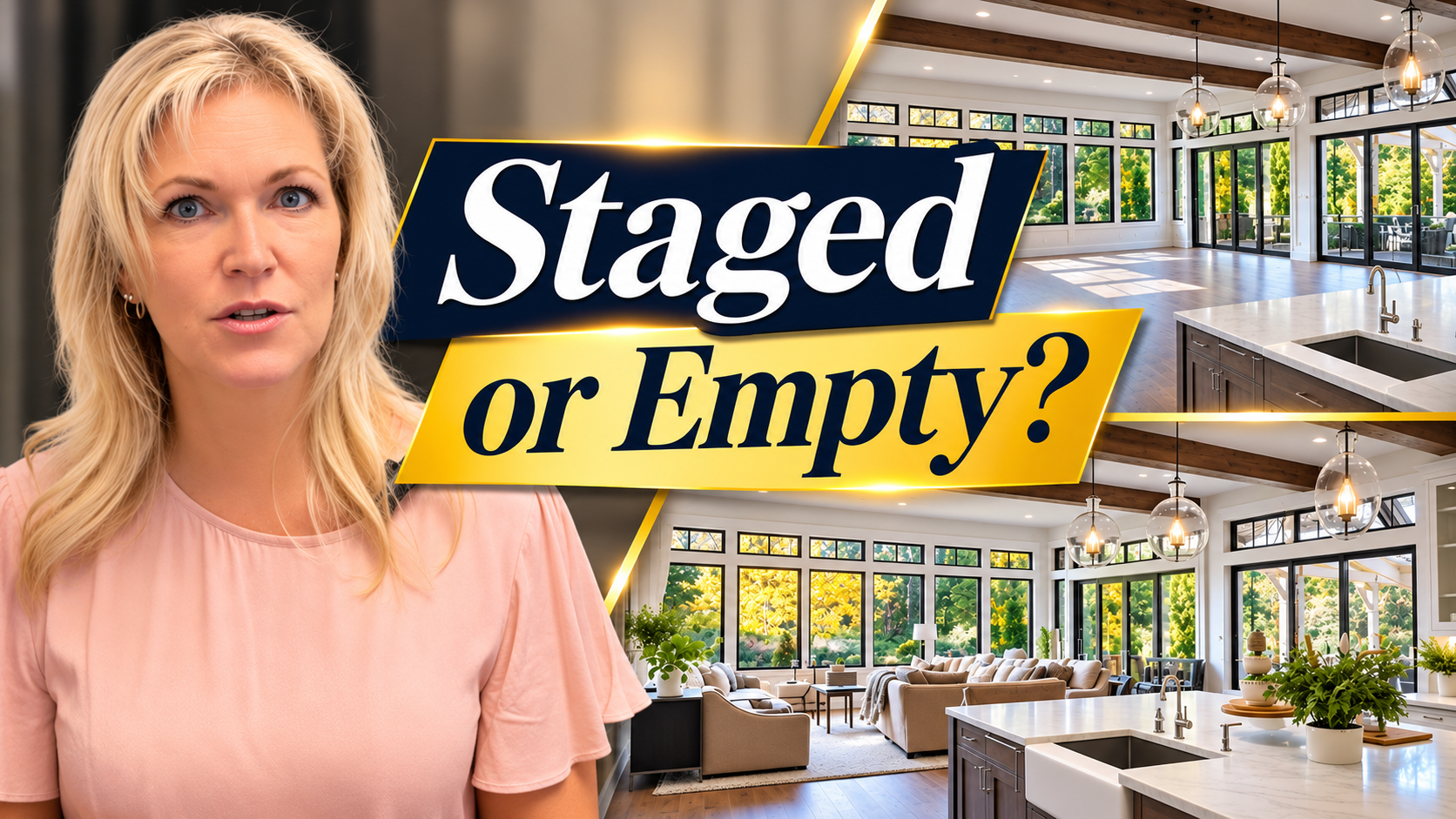
Sell Your Home Staged or Empty? And When Lived-In Fits Better
Whether to sell a home staged or empty depends on how legible each room is at phone size, since that’s where buyers first judge the property. Staging suits empty or ambiguous rooms, editing suits furniture that already fits the property, and empty rooms are hardest to read because buyers have nothing to judge scale against.
The decision sellers make by default
The real question people ask is whether to sell staged or empty, and the one that decides it is whether a room reads clearly in a photograph viewed at phone size.
This is the last decision in preparing a property, and the one most often made by default — whatever furniture is there when the photographer arrives becomes the answer.
It’s worth deciding deliberately when a property has unusual proportions in either direction: very large rooms, very specific rooms, or rooms whose purpose isn’t obvious from the architecture. It matters less when a property is conventionally proportioned and the furniture already fits it.
The three options
Staged means furniture and styling brought in for the listing period, chosen to show scale and suggest how rooms are used. It suits an empty property, rooms whose purpose is ambiguous, and properties where existing furniture is very personal or mismatched to the scale of the space. It costs money for the duration and introduces a schedule, since staging precedes photography and photography precedes listing.
Lived-in, edited means your own furniture, substantially reduced and rearranged. It’s the option most sellers should consider and often don’t, because it sits between two things with names. It suits a property whose furniture already fits it, which is common — most people furnish a property to the property. The work is subtraction: fewer pieces, clear surfaces, personal items stored. The cost is living with less for a while.
Empty means no furniture at all. It suits a seller who has already moved, a property whose architecture carries a room on its own, and cases where the alternative is furniture working against the space. The cost is legibility: without an object of known size in frame, buyers guess at scale, and they usually guess small.
Why phone size decides it
An edited lived-in presentation means a seller’s own furniture reduced and rearranged for the listing, rather than replaced with rented pieces.
A buyer’s first encounter with a property is a set of photographs viewed at phone size, judged against every other property in the same feed.
Two things follow. Scale cues matter more than styling, because at that size a viewer is working out how large a room is by comparing its contents to objects of known size. Remove the objects and the comparison goes with them.
And the photographs are what a buyer measures the property against when they stand in it. A property that shows better in person than in photographs has a conversion problem it never learns about, because the showing doesn’t happen.
The fourth option
The difference between staging and editing comes down to what’s being solved: staging supplies scale cues a property lacks, while editing removes the volume that’s obscuring the ones it already has.
There’s a fourth path that belongs in the comparison: not listing yet. If a property can’t be presented the way it needs to be right now, waiting is a legitimate choice rather than indecision. The alternative is listing into a presentation that isn’t right and absorbing the cost in the first two weeks, which carry the most attention. A listing gets one launch.
That’s a timing decision rather than a presentation one, and it’s worth separating from the other three.
Which fits your property
If you value showing the property’s scale over its character, stage it; if its character carries it and your furniture already fits, edit what’s there.
If the property is already empty, empty is a choice too, with a cost attached: rooms get guessed at rather than read.
Frequently asked questions
Is staging worth it for an occupied property?
Sometimes, but editing is the more common answer. If the existing furniture suits the property’s scale, removing volume achieves most of what staging would at no cost. Staging earns its place when rooms are ambiguous or the furniture works against the space.
Staged vs. empty: which shows better?
Staged, in most cases, because empty rooms give buyers nothing to judge scale against. The exception is a property whose architecture is strong enough to carry a room on its own.
Should I use my own furniture or stage?
If you furnished the property to the property, your own furniture is usually the better starting point. The work then is subtraction rather than replacement — fewer pieces, clear surfaces, personal items stored.
Is virtual staging an option for a luxury listing?
It can be, with the caveat that a buyer who books a showing from virtually staged photographs is comparing an empty room to what they remember. Disclosure of virtual staging matters, and expectations set by the images carry into the showing.
Should I wait to list until the property’s ready?
It’s a legitimate option. A listing gets one launch, and the first two weeks carry the most attention, so listing into a presentation you know isn’t right spends that attention at a discount.
json